R A D I C A L C A R E is a proposition for intimacy, togetherness and co-creation
a tapestry of woven bodies-territories-stories-relationships
R A D I C A L C A R E es pensamiento vivo que trasciende la materia
it is a place of encounters
a place of learning
a place of confrontation
R A D I C A L C A R E is making space to feel the things that seem too big to feel alone
it is a revolt and it is a gathering
it is collective struggle and collective joy
R A D I C A L C A RE is the enchantment of the matter
It is raw
experimental
biodegradable
R A D I C A L C A R E is reciprocity
a concoction of nitrogen, hydrogen, oxygen and carbon meant to return to the Soil
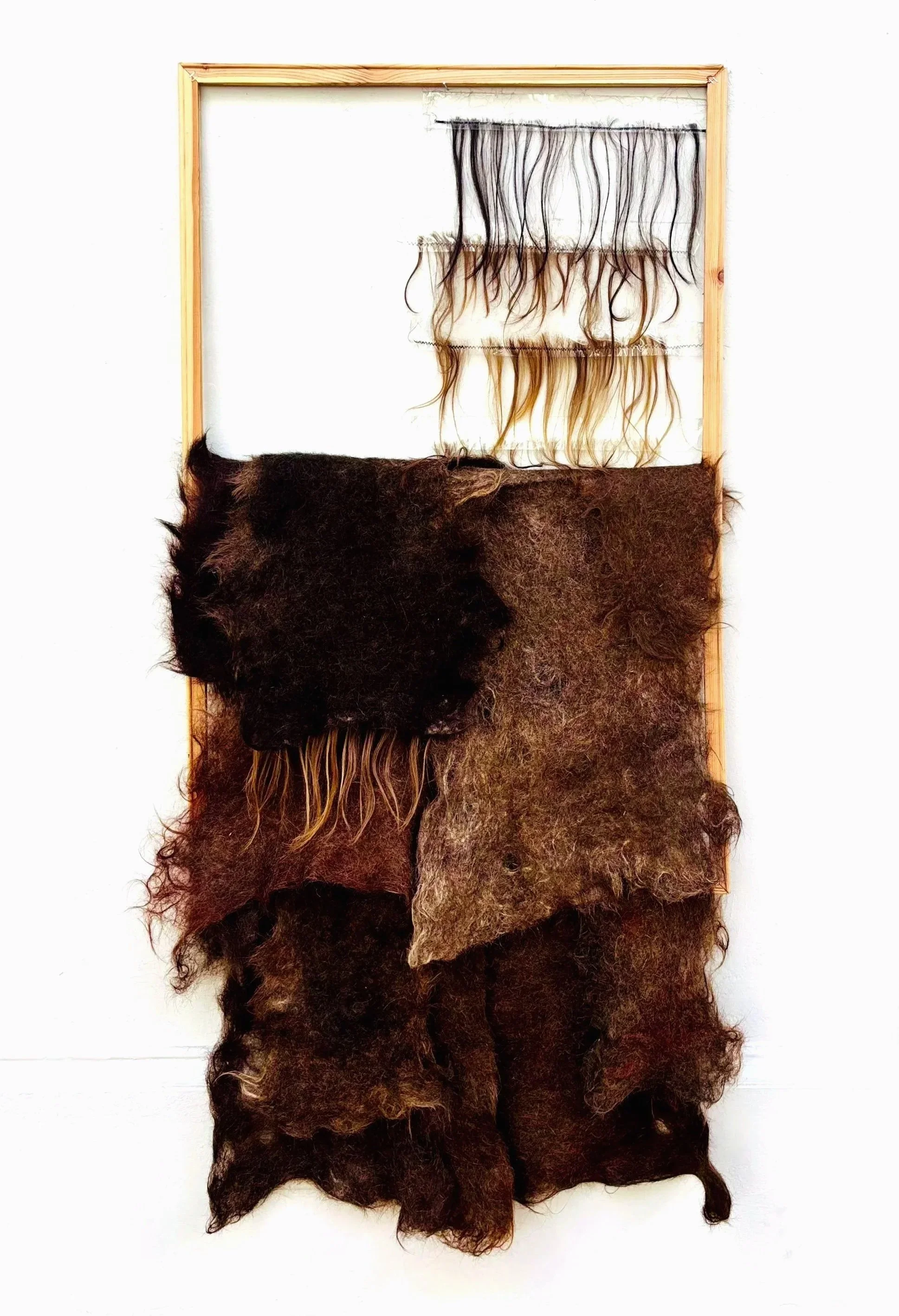
Human hair in wooden frame - 2025
R A D I C A L C A R E evolved from my research on human hair, a curiosity for inter-species learning & making, and the pursuit for ecological reimagining. .
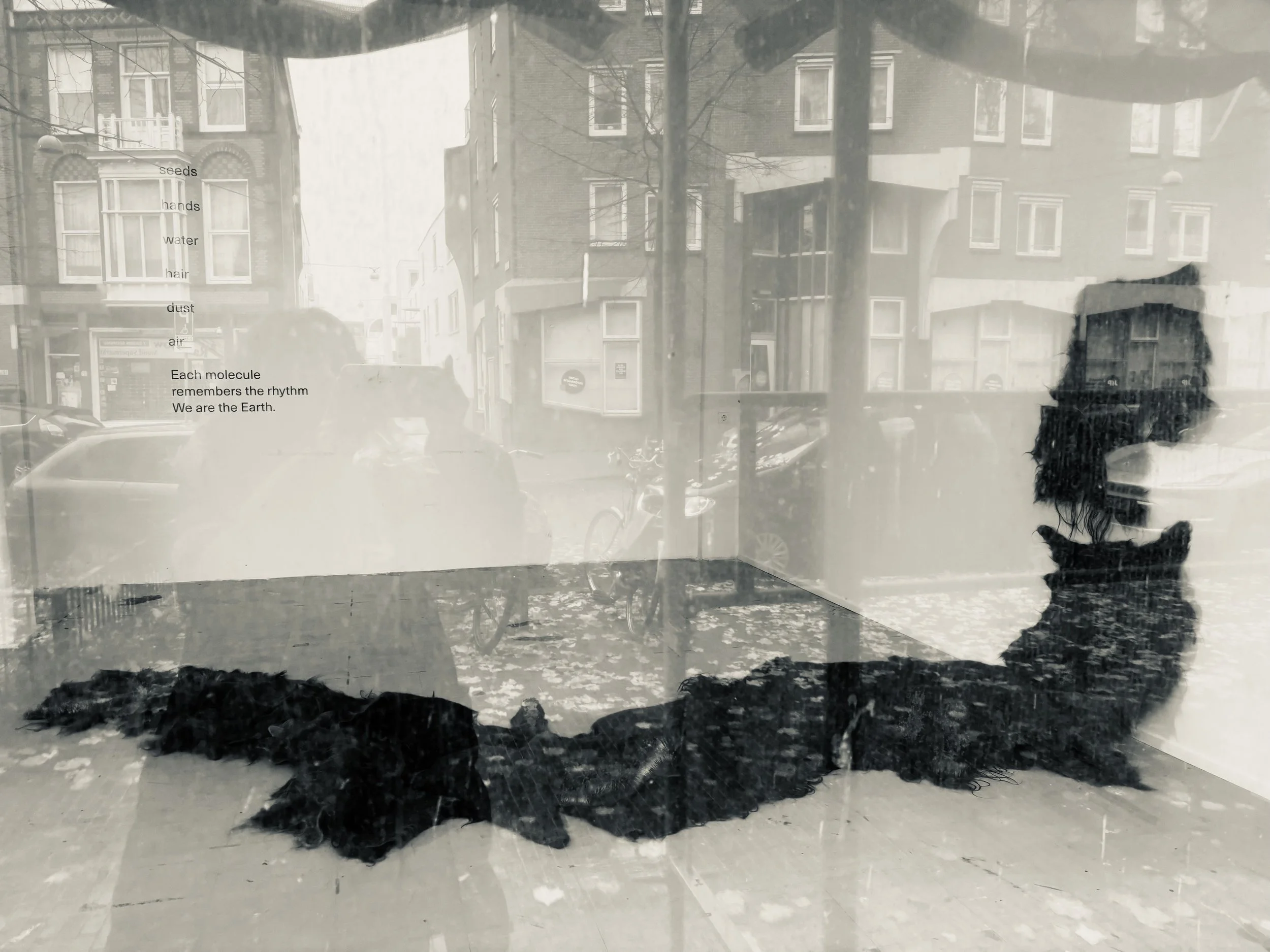
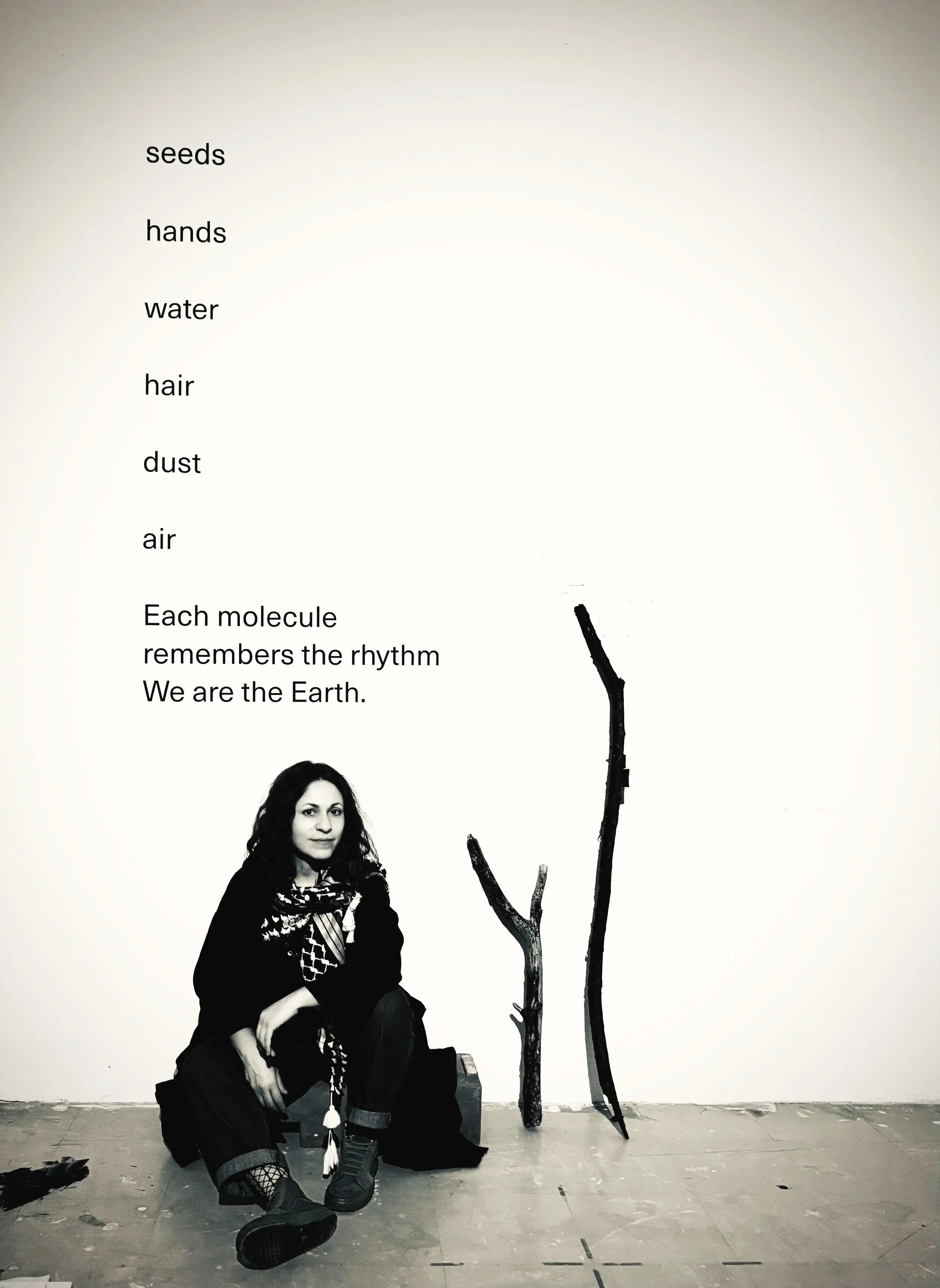
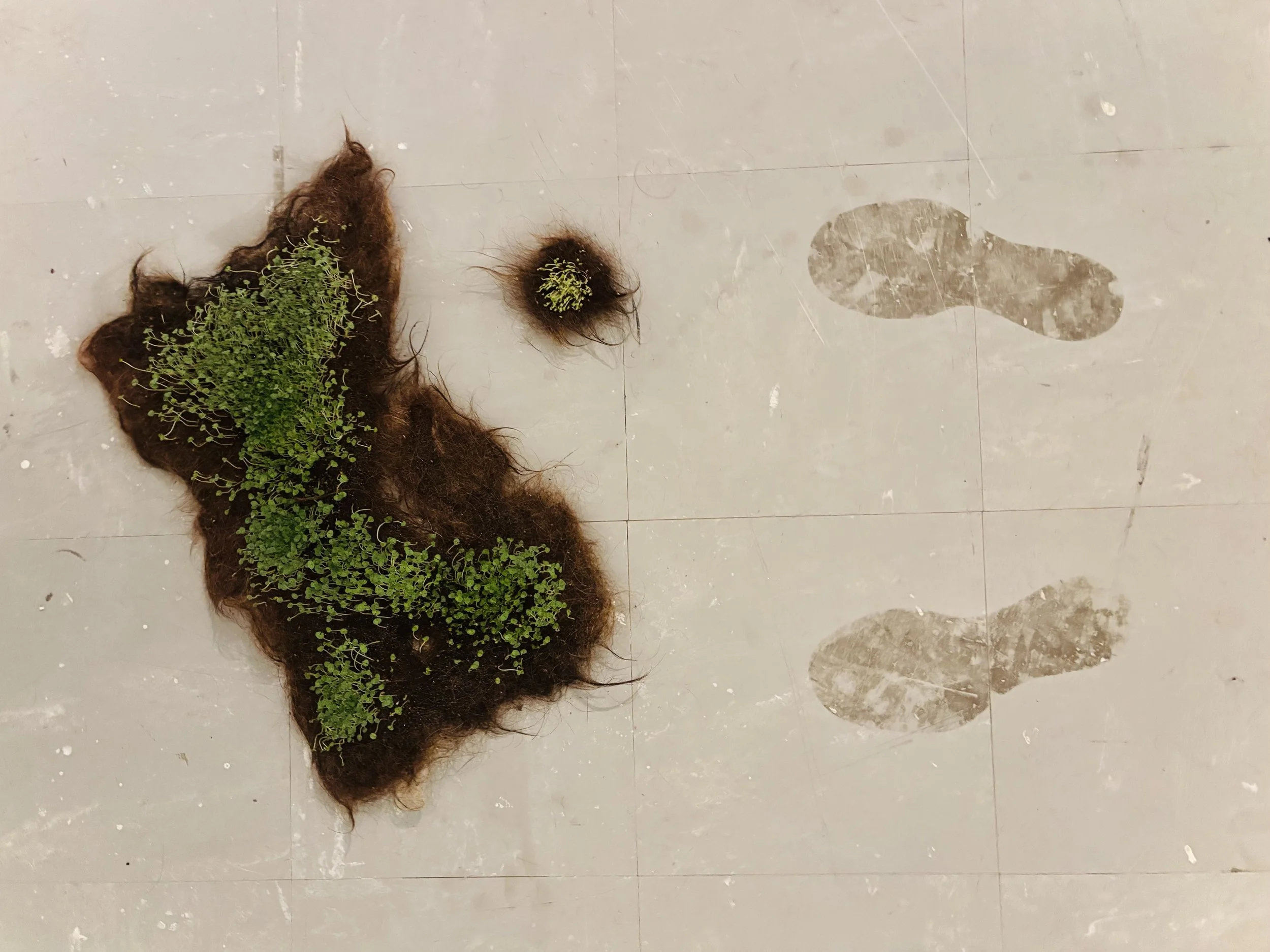
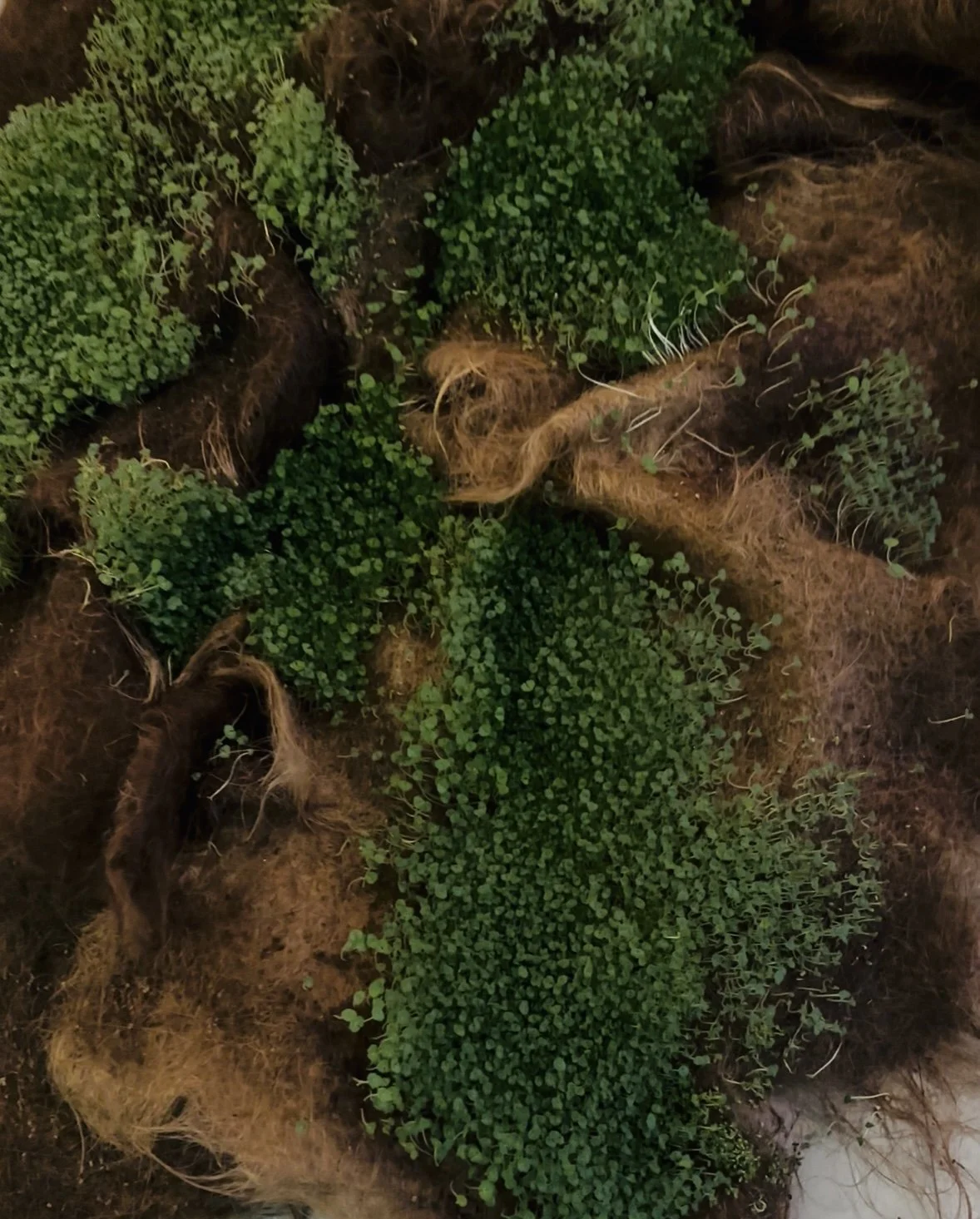
Exhibition: Re:generation, The Grey Space in the Middle - November 2025
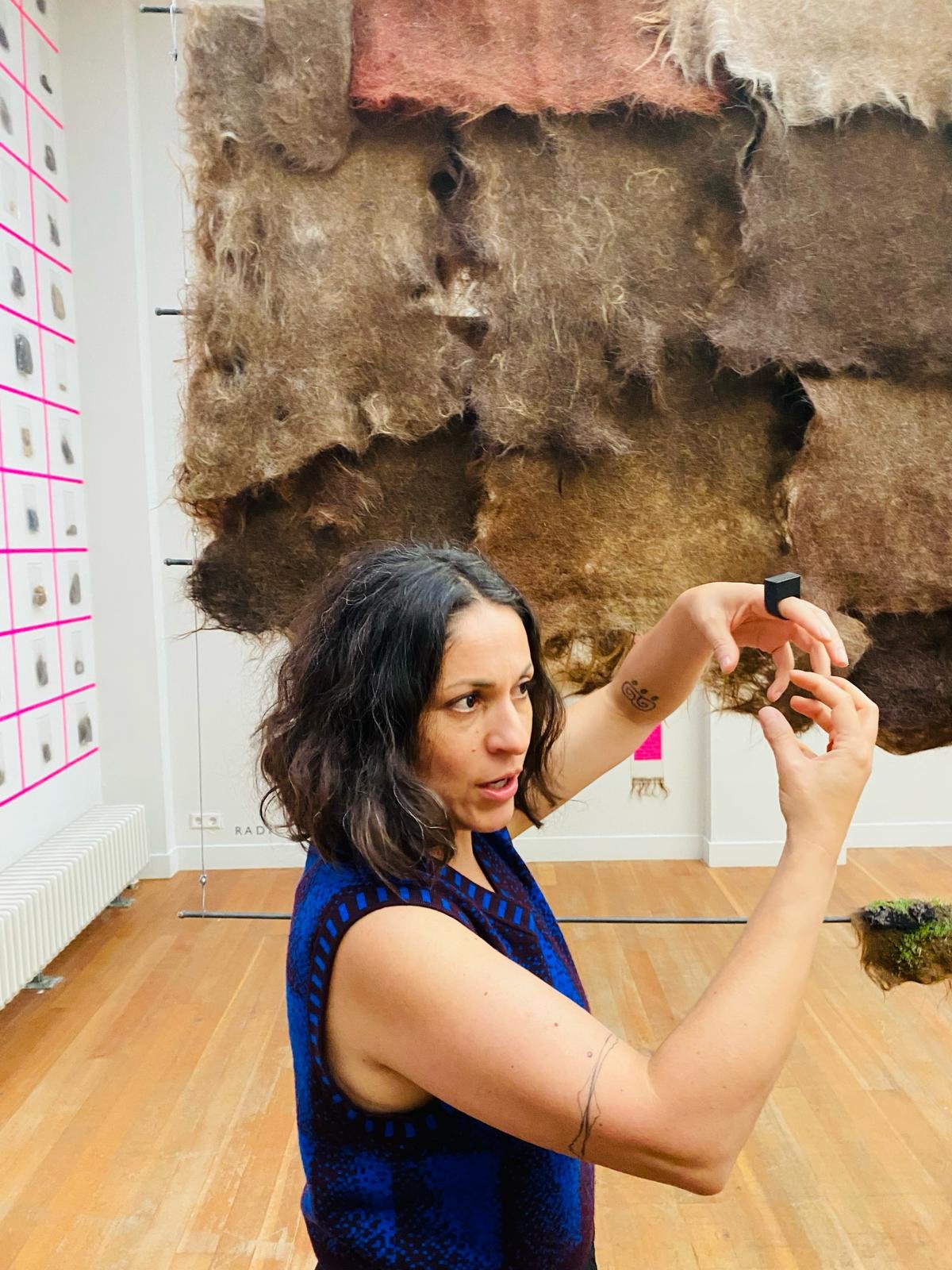
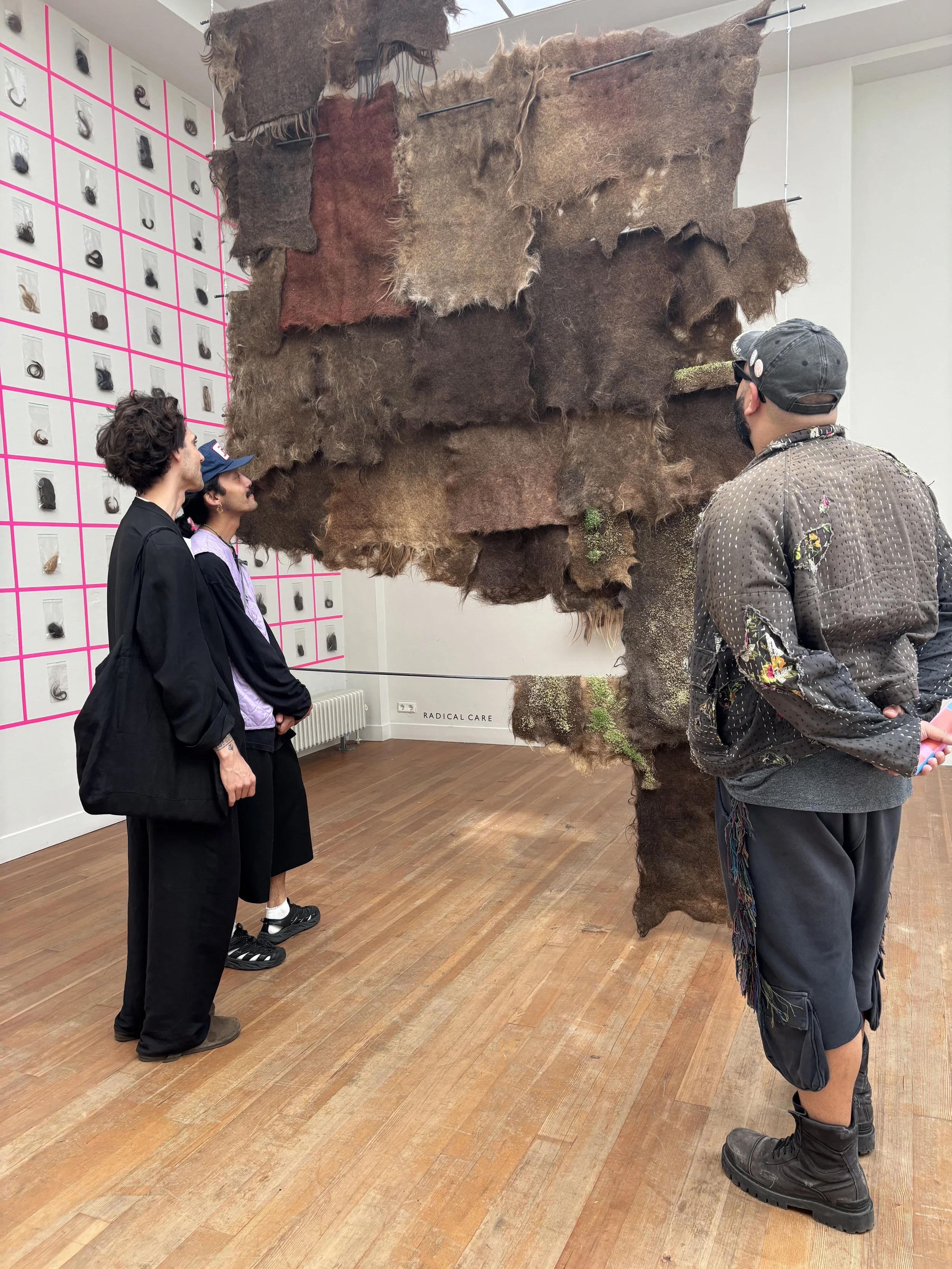
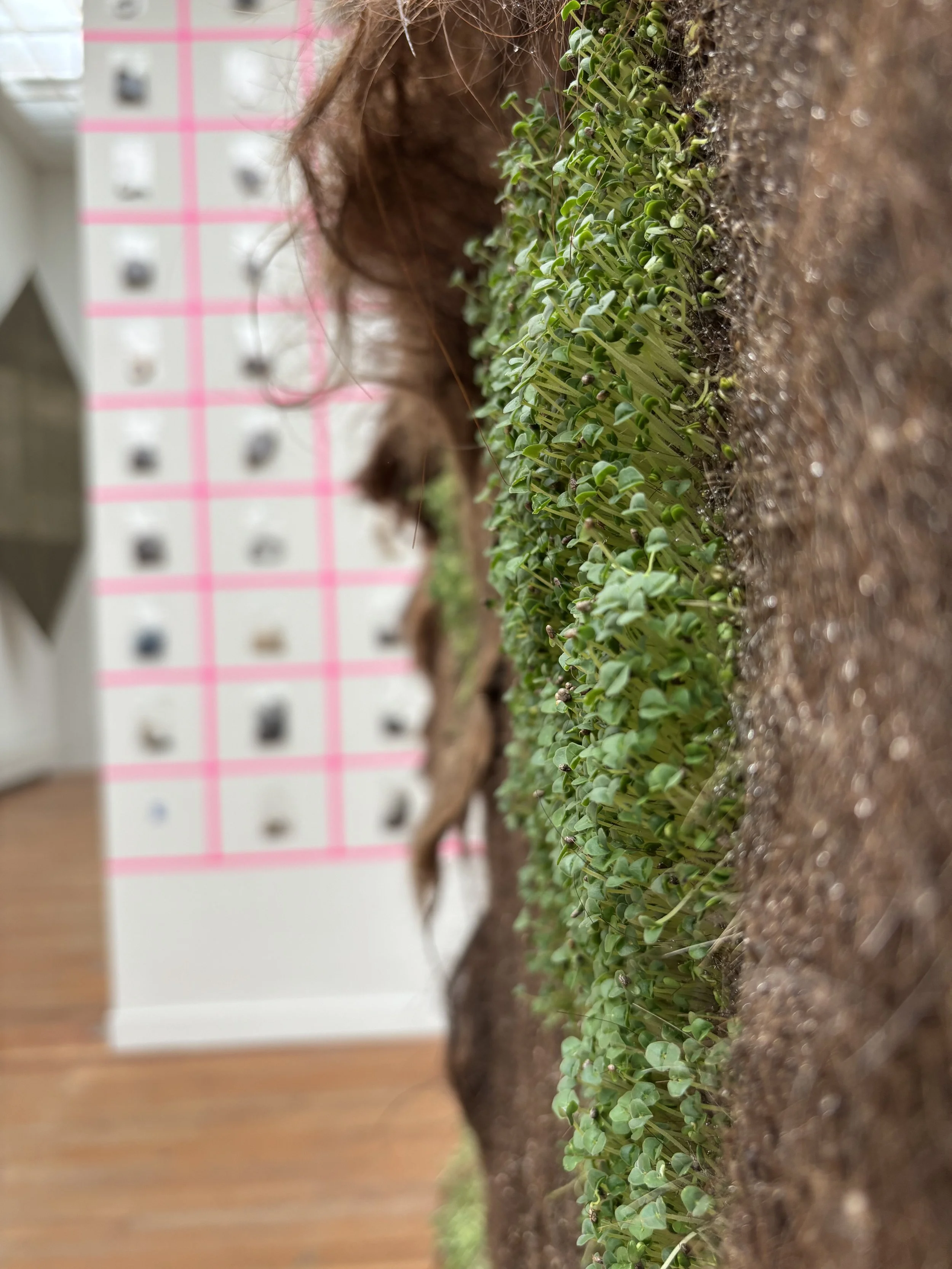
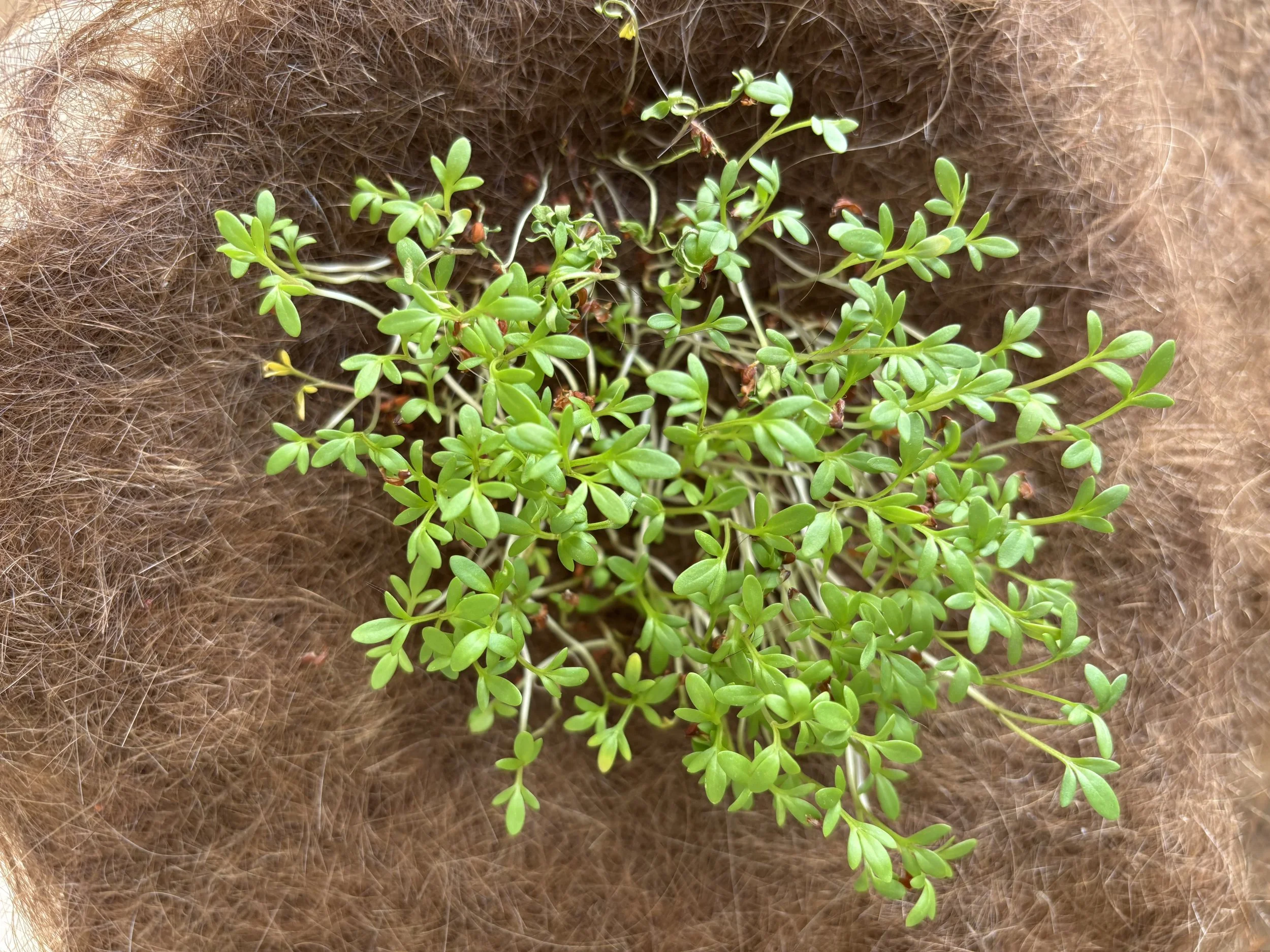
The organic matter slowly breaks down into nitrate, phosphate and carbon to nourish seeds that grow edible greens, which eventually will become nutrients for the soil, where this piece is meant to be placed -completing the cycle of regeneration.
Graduation show, Royal Academy of Arts The Hague - July 2025
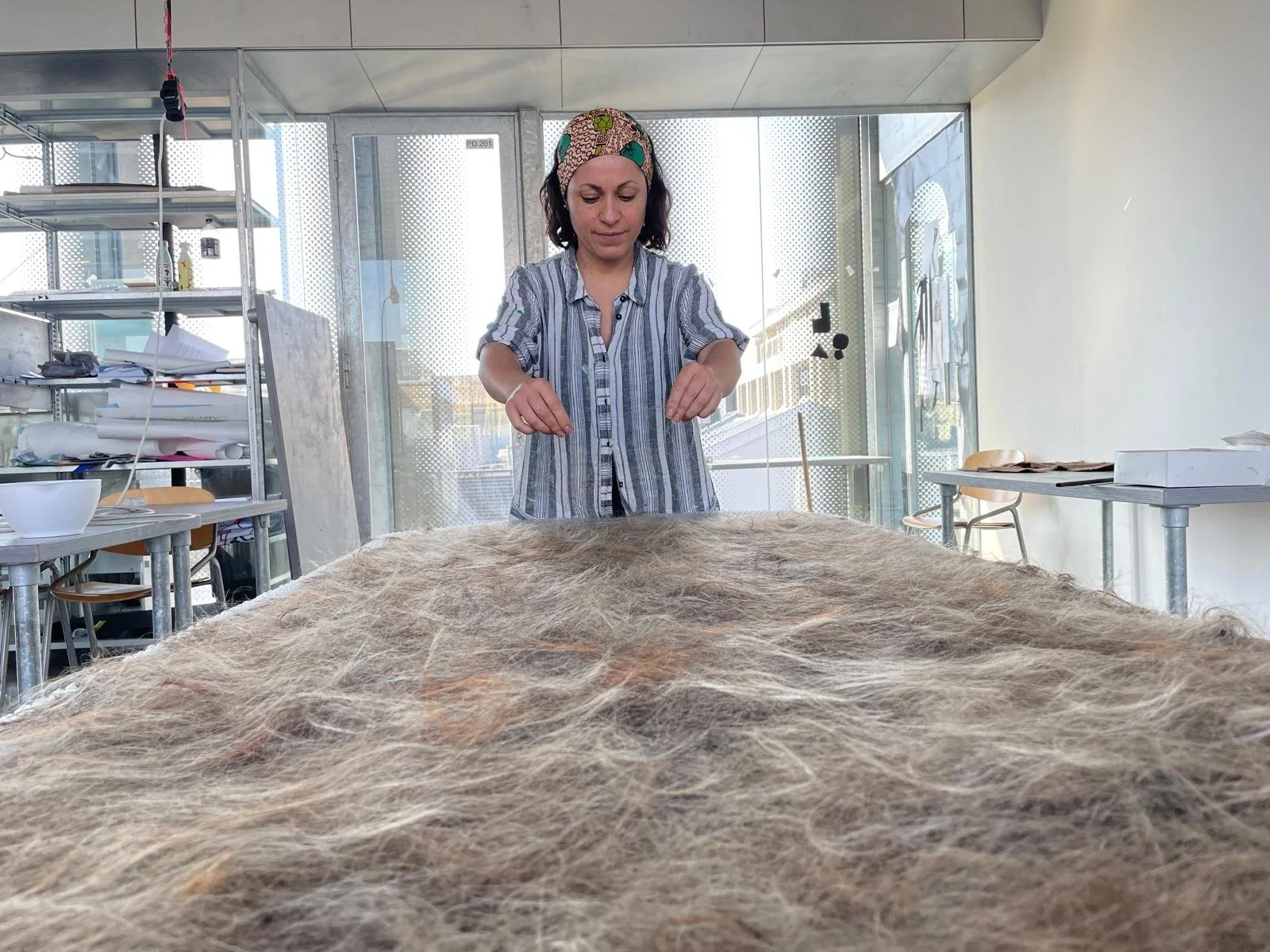
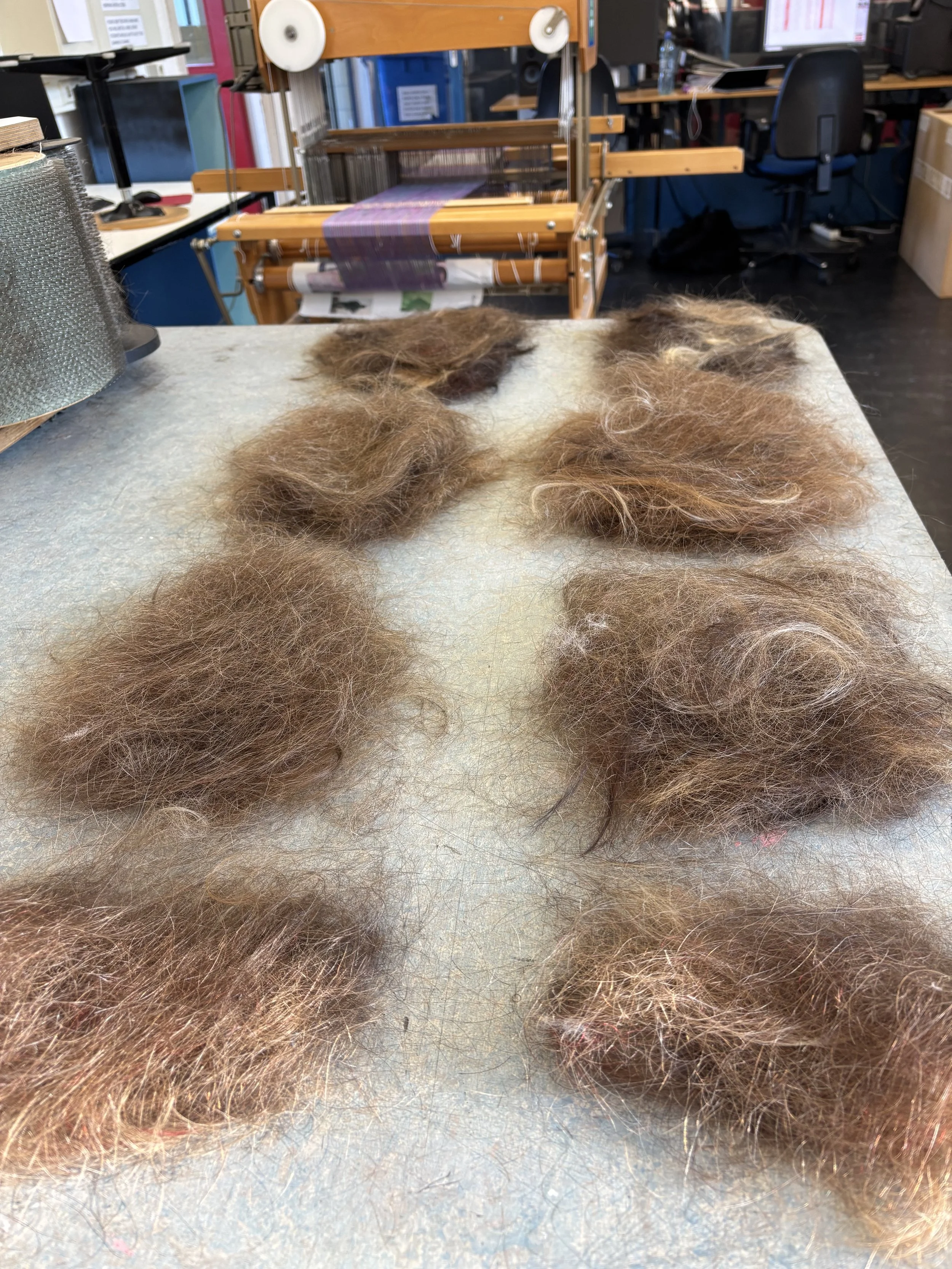
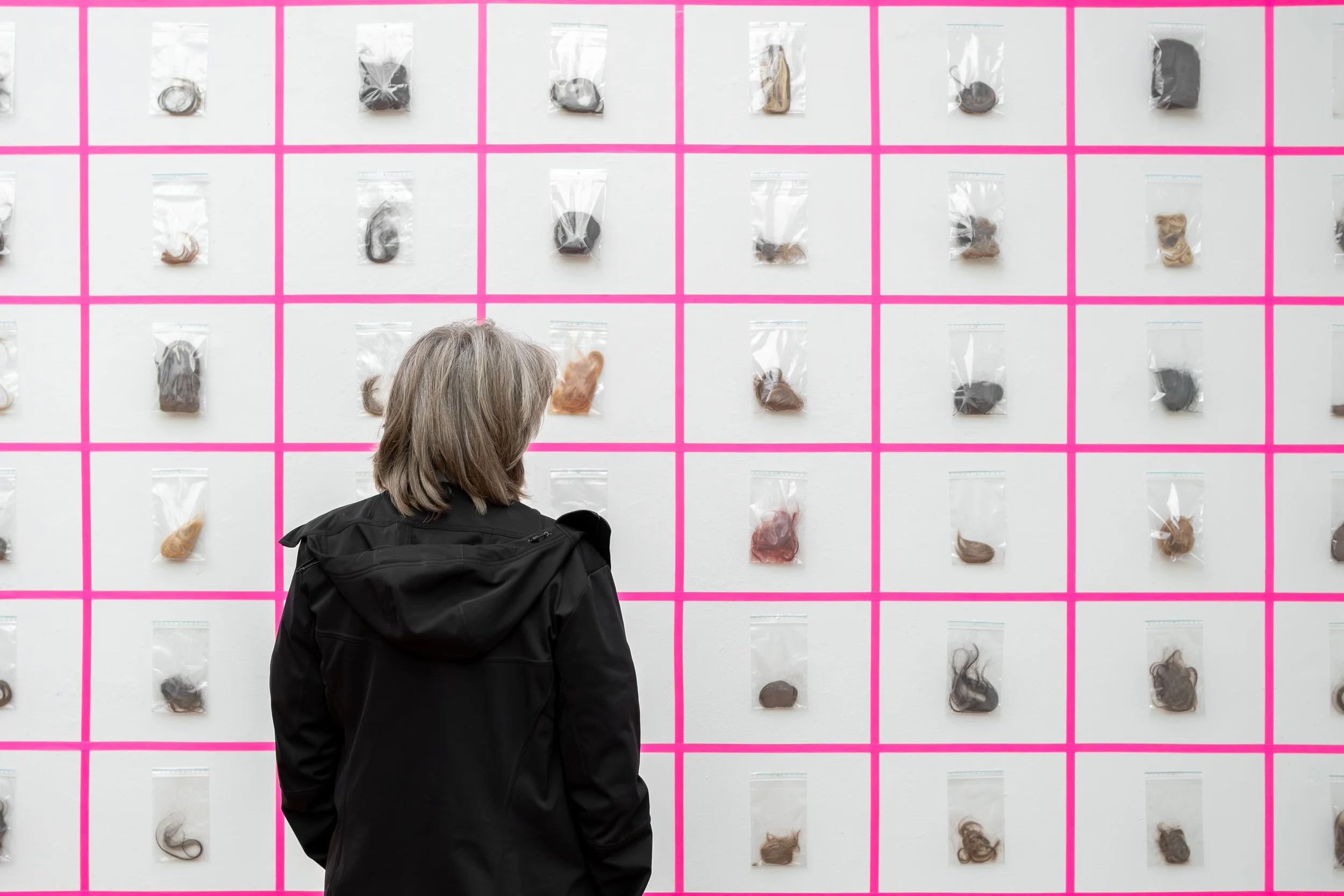
Human hair tapestry (400×190cm) with growing chia sprouts, and collection of 200 individual hair donations.
Process
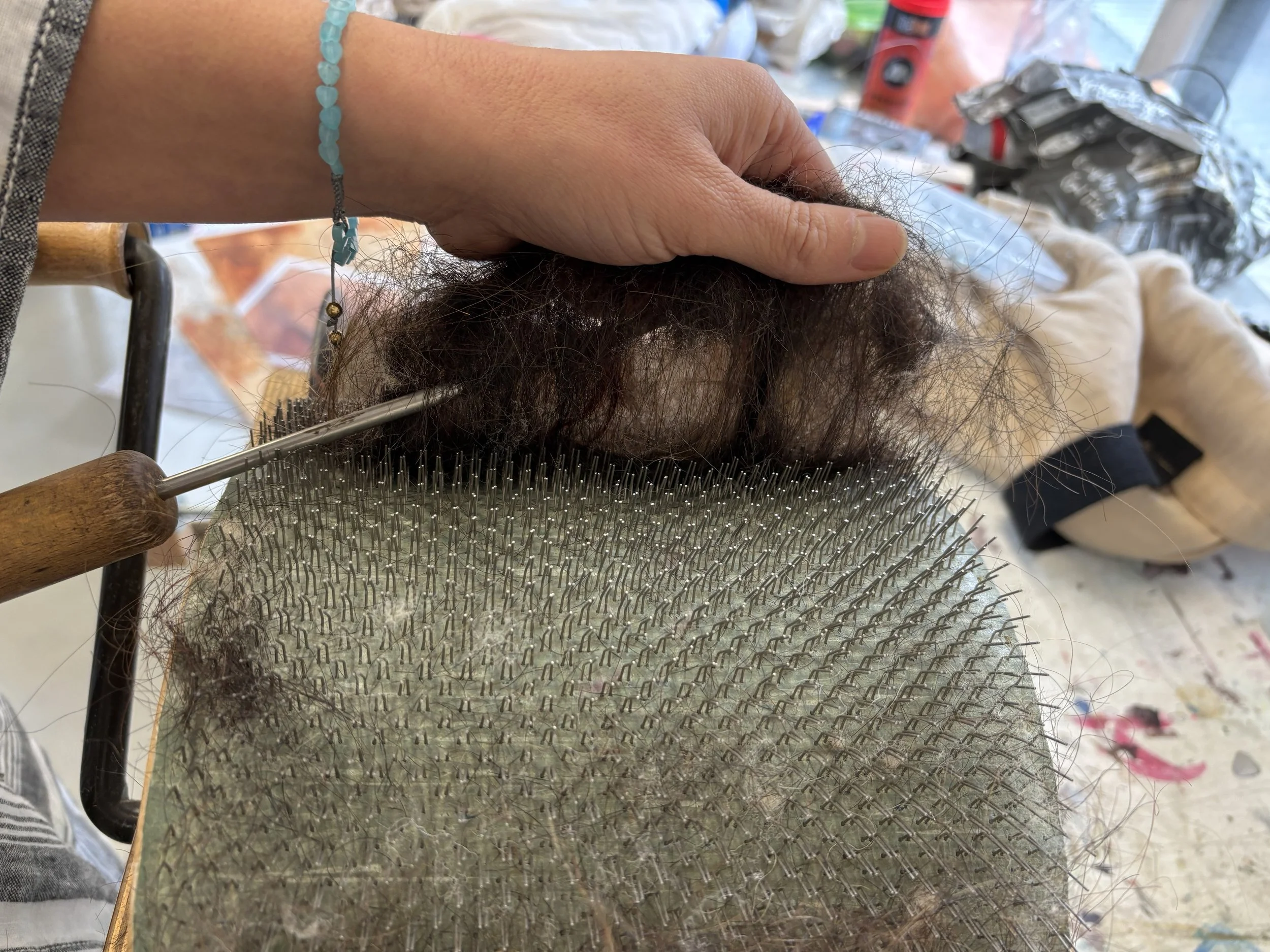
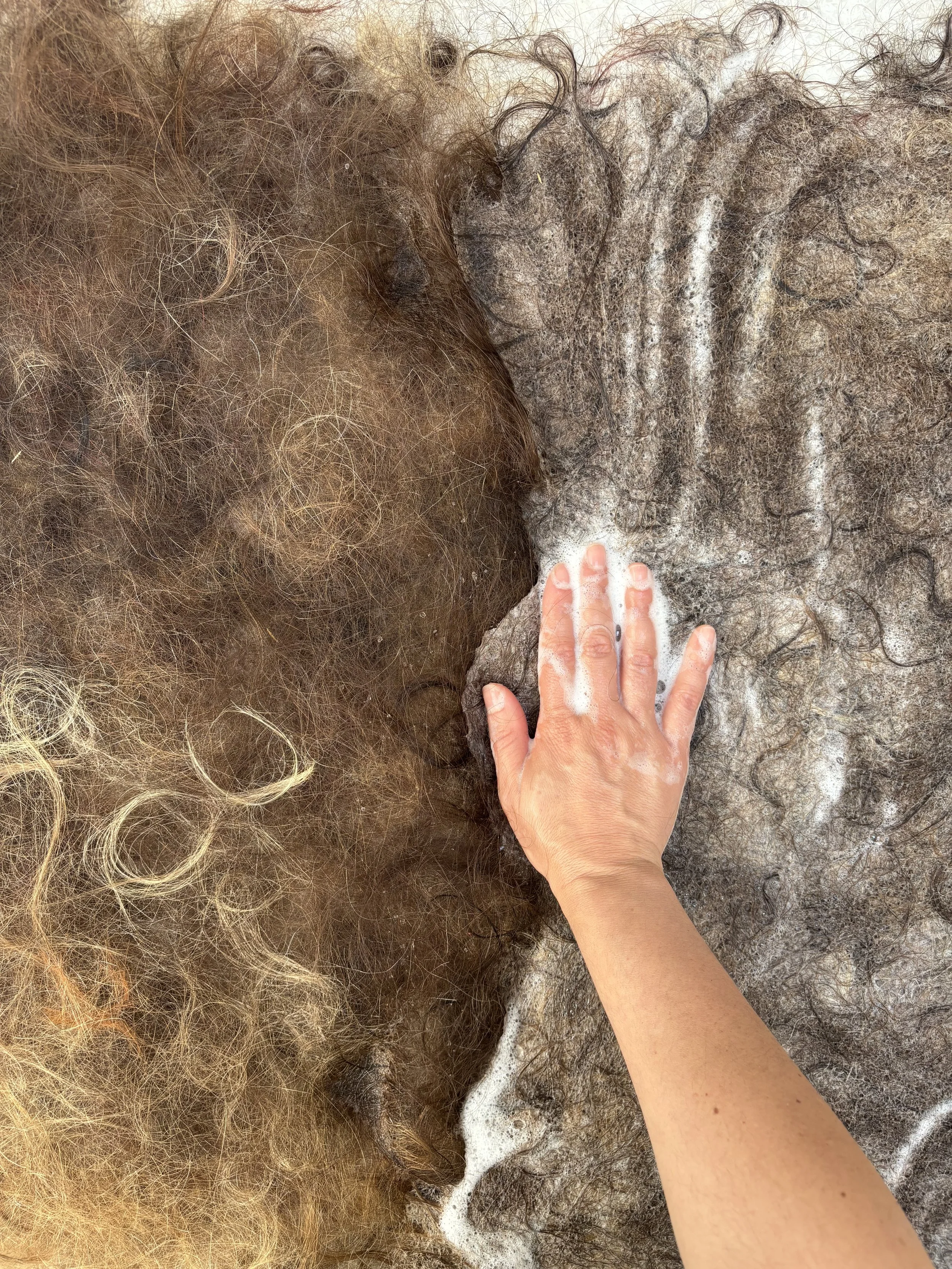
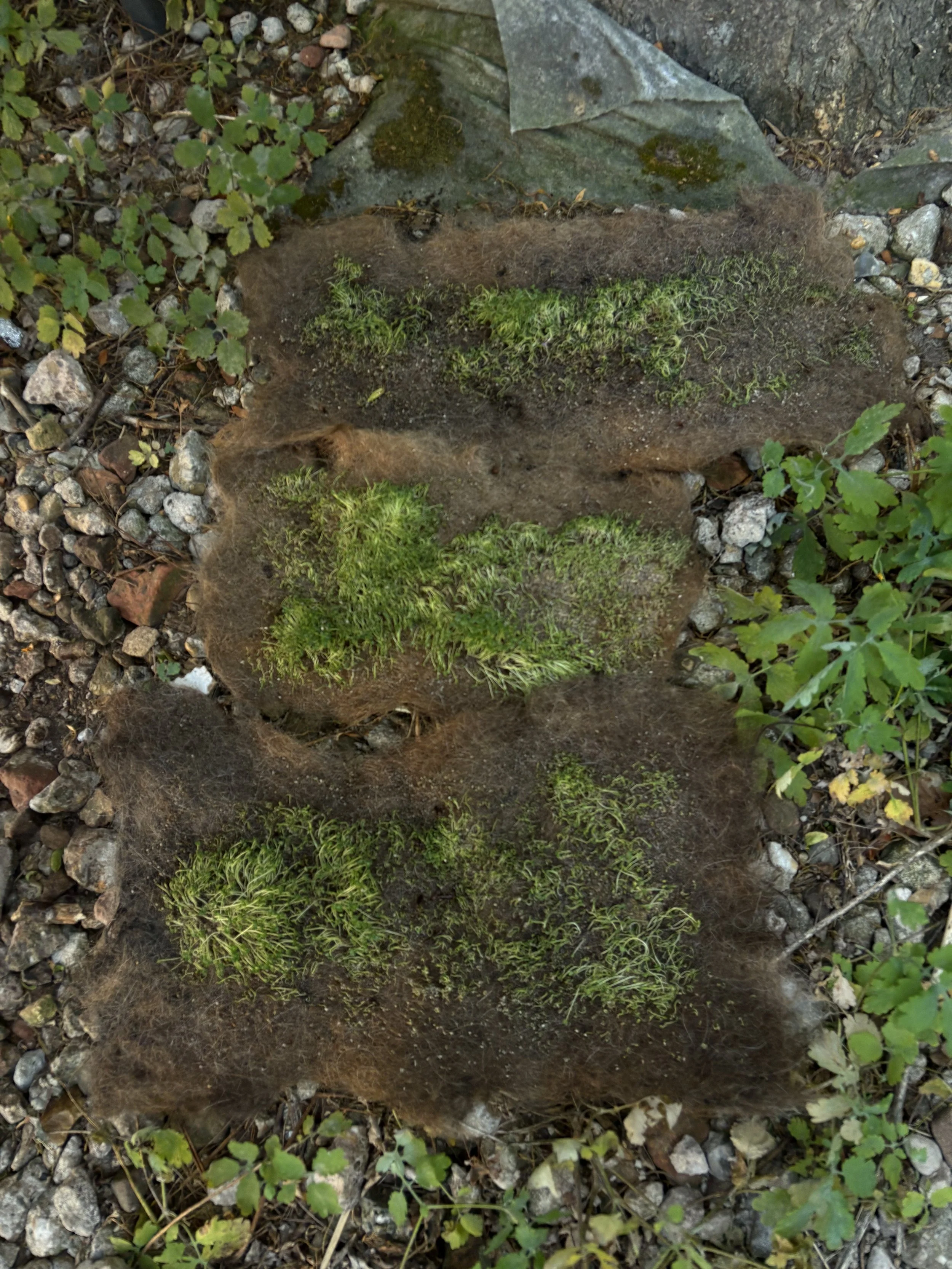
Felting is as much a technique as it is a method of resistance and survival. It is a place-based craft that has been practiced in different forms and different geographies since the beginning of times. In this case, it is ancestral knowledge brought to the contemporary as a statement: to oppose to the practices of fast production/consumption/pollution that exist in the ways of hyper-capitalism today.
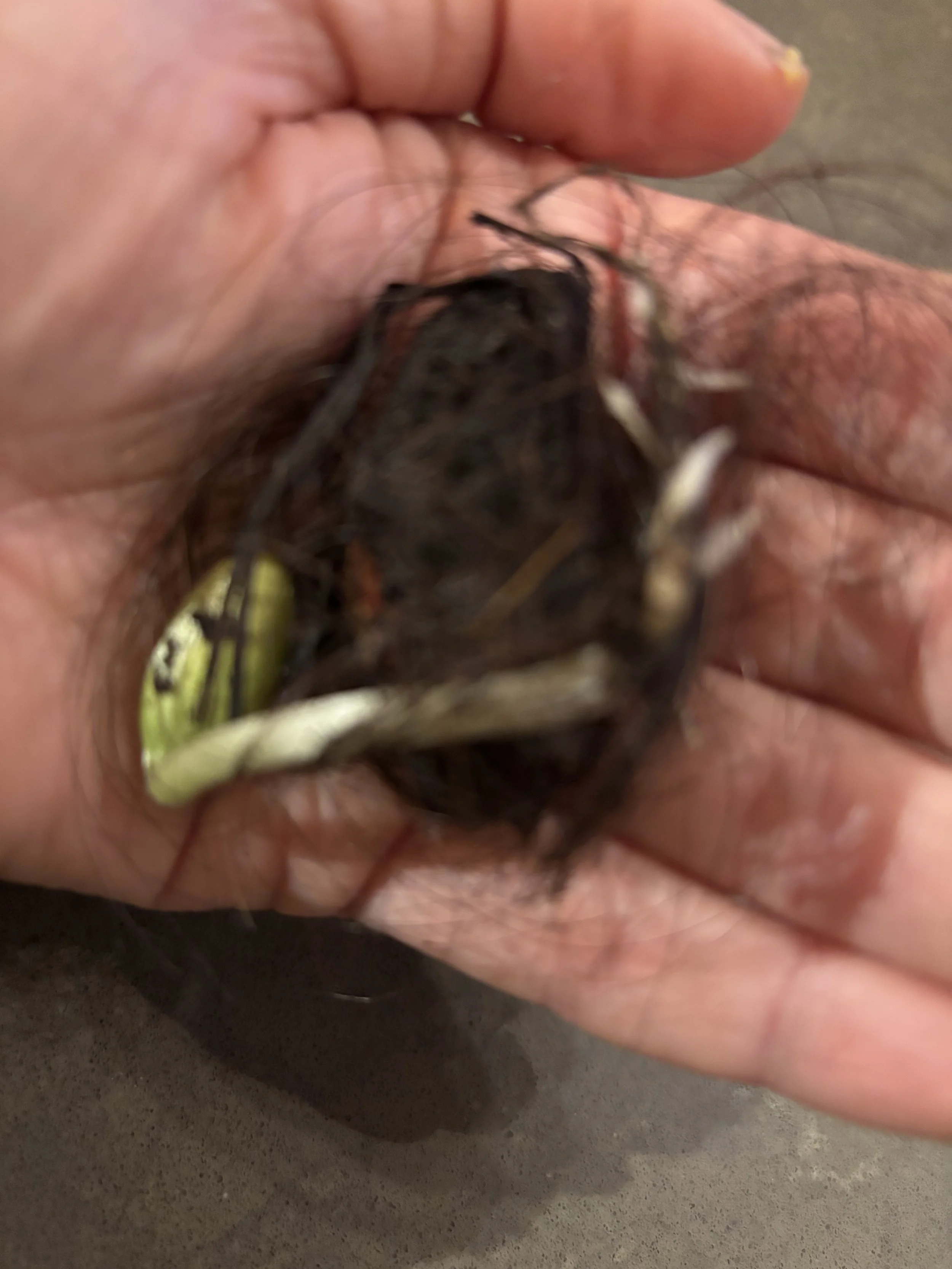
Inspired by the work of the organisation “matters of trust” in Chile, where they use human hair to clean oil spills in the oceans, and for soil remediation, I started to research about the chemical composition and other qualities in human hair, thinking about the possibilities that could exist at the intersection of science, craftsmanship and regenerative practices. In my first experiments, I tried growing zucchinis in little hair balls, but quickly learned that I would need thicker patches to fulfil the nutrient requirements of this plant. Then, I tried growing micro-greens in sample patches of hair with incredibly positive results.